$200M War Fund: How Warhound Plans to Genetically Engineer Elite Military Canines
Backed by a $1.2 billion valuation, a new venture aims to solve the U.S. military's dwindling supply of working dogs by cloning and gene-editing high-performance breeds.
By Megan Ivanov ·
A $200 million funding round has just launched a venture determined to rewrite the biological rules of the U.S. military’s working dogs.
The company, Warhound, emerged from stealth on Thursday with a valuation of $1.2 billion, backed by heavyweights including Sequoia, 8VC, Corner Ventures, and In-Q-Tel, a venture firm with ties to the CIA and other U.S. intelligence agencies.
Three critical elements define the company's immediate roadmap. First, Warhound intends to address a significant supply chain vulnerability in the U.S. defense sector. Currently, more than 80% of the military's working dogs are imported from Europe, and fewer than half of those arrive in a fit state for service. This reliance on foreign nations for a critical asset is a strategic gap Warhound aims to close by engineering dogs locally with specific traits suited for demanding missions.
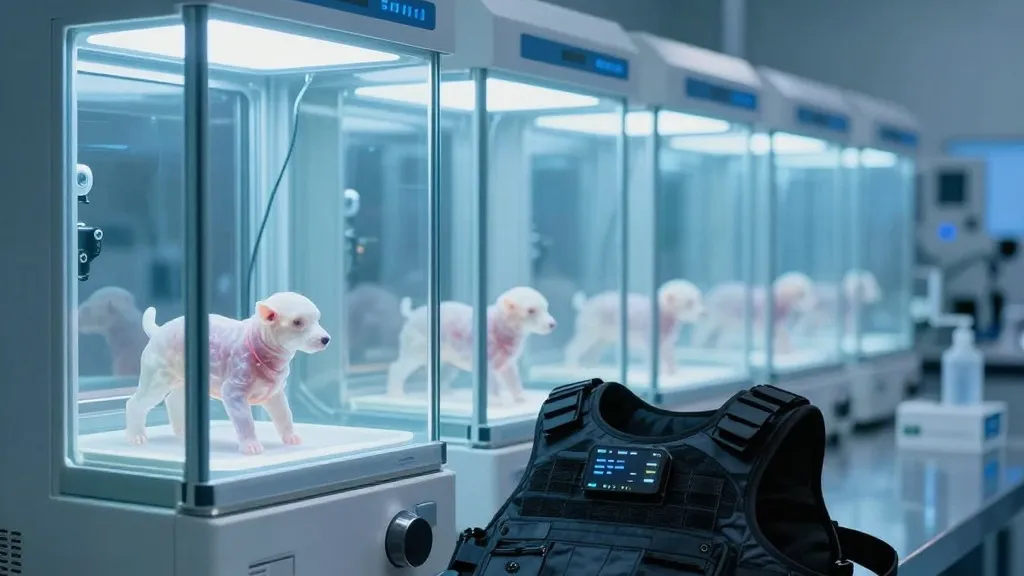
Second, the biological process involves a deep dive into the genetics of top-performing breeds, specifically the Belgian Malinois and German Shepherd. The team has established a biobank using cell lines from these dogs. By editing their genes, the company plans to add traits that improve speed, agility, and olfactory sensitivity for bomb detection, while removing genetic predispositions to issues like poor eyesight, cancer, hip dysplasia, and muscle atrophy.
Third, the dogs will not operate in isolation. They will be outfitted with hardware and software from Anduril, a defense technology firm. This gear, which includes protection vests and goggles, is designed to provide situational awareness and coordination for both the canine and its handler.
The venture is the brainchild of Ben Lamm, of Colossal Biosciences, and Palmer Luckey, the founder of Anduril. Lamm met Luckey at a conference roughly a year ago, where Luckey expressed a need for more advanced solutions for military working dogs. Lamm subsequently researched the breeding of these animals, discovering that many fail training due to inherited health problems. He believed that gene editing could enhance their health, longevity, and performance metrics.
Colossal Biosciences, known for its work in de-extinction, will license its technology to Warhound and hold equity in the business. Luckey is a partner in the venture but does not own equity. The company plans to use Viagen, another Colossal-owned entity, to clone the dogs. Viagen’s technology boasts a high success rate, and the first batch of dogs is expected to be cloned and incubated soon, with births anticipated in early next year.
The goal is for these engineered dogs to be in service within two years. They will be tasked with dangerous operations that are too risky for humans or too complex for machines, such as bomb detection and specialized searches. Lamm emphasized that the Anduril gear will make the dogs safer and healthier "on top of the dog, not in the dog," protecting both the animal and its human handler.
Warhound has not yet determined the final price for the dogs but expects to sell them to first responders, the Department of Defense, military service groups, and police forces. The company has briefed numerous government groups on the business. To address civilian safety concerns, Lamm stated that each dog will undergo standard military working dog training and will be managed by the buying entity.
The American Humane Society is guiding the certification of Warhound’s training program to ensure the animals are treated humanely. The Society stated, "We applaud Warhound and Colossal for inviting the country’s first national humane organization, which is grounded in science and ethics, to have a seat at the table. We look forward to working with them to help ensure the animals in their care are treated humanely." Retired dogs from this new program are also expected to enter the Society’s Military Working Dog Reunification Program to find permanent homes.
Source: TechCrunch · original report published