SpaceX declines military contracts as PLD Space finalizes Miura 5 rocket
The private space giant turned down three US Space Force offers, while a Spanish startup prepares its first flight and a Canadian firm seeks funding.
By Aiko Lombardi ·
SpaceX has made a notable shift in its commercial strategy by turning down three launch opportunities from the US Space Force. The company communicated its decision to the military branch, effectively declining the work despite the potential revenue. This move highlights the complex balance SpaceX maintains between its lucrative commercial schedule and its role in national defense. For industry observers, the decision suggests that the company is prioritizing its current production pipeline or specific contract terms over immediate military orders. The rejection was part of a busy week for the aerospace sector, which also saw significant updates from European and Canadian startups.
The primary claim here is that SpaceX is actively curating its launch manifest. By saying no to these specific military contracts, the company is signaling that it has capacity constraints or strategic preferences that are not being met by these particular deals. This is not the first time the company has been selective with government work, but the simultaneous nature of the three declined offers marks a distinct moment in its relationship with the US military. The decision underscores that even the dominant player in the launch market must make tough choices about which missions to accept and which to pass on.
On the civil side of the space industry, attention has turned to the technical challenges of the Starship program. A NASA safety panel has indicated that a lunar landing mission using Starship might require up to 22 in-orbit refueling operations. This figure provides a concrete benchmark for the complexity of deep space logistics. For non-experts, this means that a single rocket launch is not enough to reach the moon; instead, a fleet of identical vehicles must launch, rendezvous, and transfer fuel in space. The high number of refuelings represents a significant engineering and coordination hurdle that must be overcome before humans can return to the lunar surface.
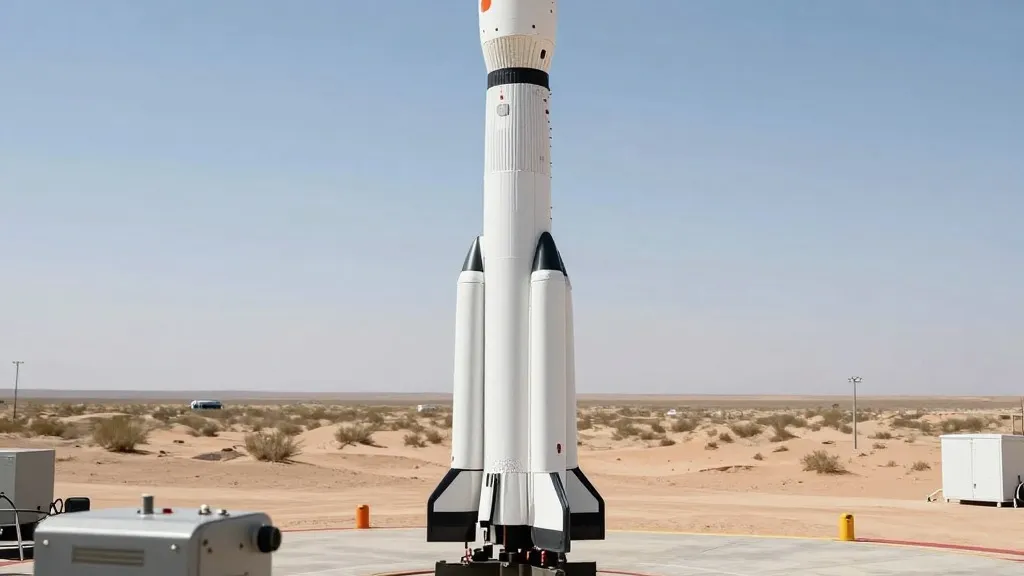
While the US dominates headlines, the European launch sector is seeing tangible progress. PLD Space, a Spanish company, reports that its Miura 5 rocket is nearing final integration. The small-lift vehicle is targeted for its first flight before the middle of 2027. This timeline is critical for PLD as it seeks to establish itself as a reliable provider of small satellite launches. The company has already manufactured three of these rockets, with two dedicated to testing key systems and the third prepared for the actual inaugural launch. This staged approach allows the team to apply lessons learned from earlier tests directly to the flight-ready vehicle.
CEO Raúl Torres explained that the manufacturing of these three vehicles has allowed their teams to work continuously across different production stages. He noted that they are applying the lessons from each qualification campaign directly to the launch vehicle. Currently, one Miura 5 second stage is fully integrated and is undergoing system-level testing. This stage is located at the company’s test facility in Teruel, where it is undergoing a qualification campaign that includes a wet dress rehearsal and a static hot-fire test. These tests are essential to ensure the rocket can withstand the stresses of launch.
Across the Atlantic, the Canadian launch startup Reaction Dynamics is seeking to expand its operations significantly. The company is looking to raise $350 million to grow its workforce from 68 employees to more than 350. This capital injection is aimed at accelerating the development of its Aurora rocket, a small-lift vehicle that the company hopes will reach orbit in 2028. Reaction Dynamics is one of three prominent launch startups in Canada, and this funding round is crucial for maintaining its competitive edge in the emerging North American launch market.
In addition to the Aurora, Reaction Dynamics has announced plans for a medium-lift rocket called Borealis. This larger vehicle is targeted for a debut by 2031. The dual-rocket strategy allows the company to address different market segments, from small satellites to heavier payloads. The expansion of staff and the development of new hardware indicate that Reaction Dynamics is moving from the concept phase into a more robust execution phase. The next three years will be a critical period for the company to prove its technology and secure contracts.
The caveats and open questions surrounding these developments are significant. For SpaceX, it remains to be seen why the specific military contracts were rejected, and whether this signals a broader shift in its government business model. For the Starship program, the requirement for 22 refuelings raises questions about the efficiency and reliability of the in-orbit refueling process. For PLD Space and Reaction Dynamics, the main risk is execution. Both companies are operating on tight timelines, and any delays in testing or funding could push their debut flights further into the future. The coming year will provide key milestones that determine if these startups can deliver on their promises.
As the aerospace industry continues to evolve, the interplay between established giants like SpaceX and emerging players like PLD Space and Reaction Dynamics is shaping the future of access to orbit. The decisions made this week, from contract rejections to funding seeks, reflect the high-stakes nature of the industry. Readers should watch for the next few launches on the calendar, as these events will provide real-world data on the progress of these new vehicles and the continuing dominance of SpaceX in the launch market.
Source: Ars Technica · original report published