Hungary releases Communist era secret police files after 36 year wait
Prime Minister Peter Magyar's government has ordered the public release of state security informant records, marking a significant step in the country's reckoning with its authoritarian past.
By Megan Ivanov ·
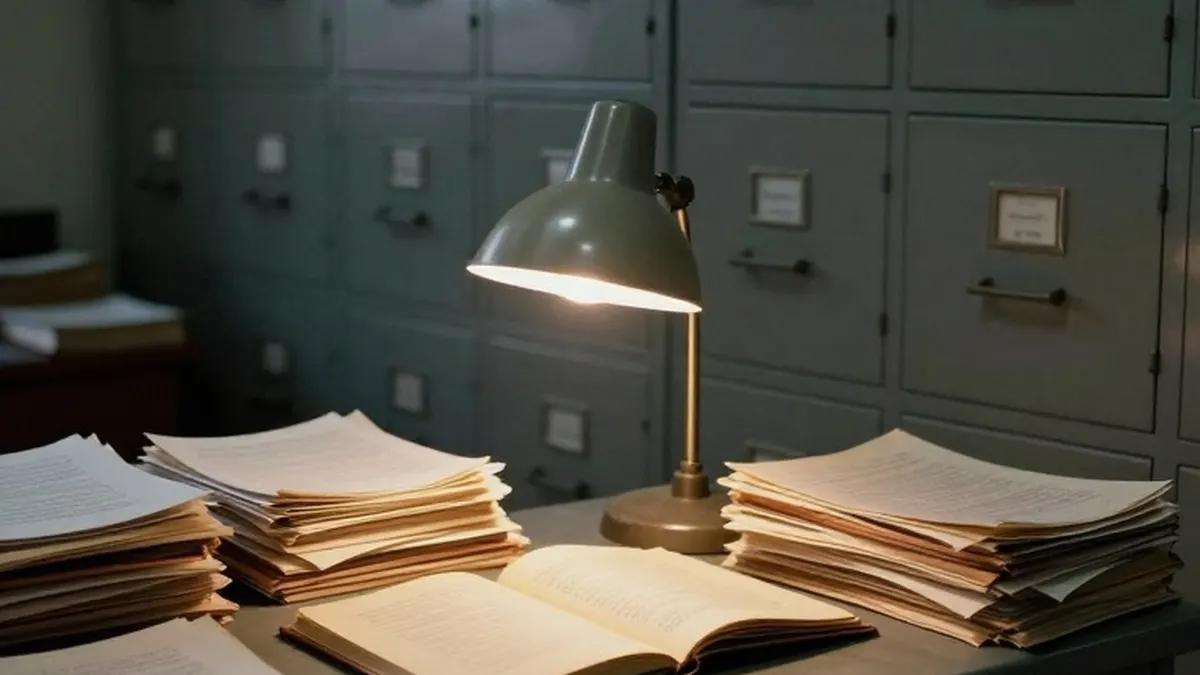
On November 4, 1956, Soviet forces moved into Hungary to crush the nation's anti Communist uprising. The decades of dictatorship that followed relied heavily on a brutal secret police force to maintain control. As the country marks the 70th anniversary of that pivotal day, the government is finally opening the archives that document the work of those agents, ending a long period of secrecy.
Prime Minister Peter Magyar and his Tisza party had pledged to make these agent files public if they won the election. The decision follows more than three decades of intense debate regarding how to handle these sensitive documents. The release is considered historic and is expected to reignite discussions about guilt and responsibility during the Communist era.
For years, civil rights activists and smaller political parties have demanded access to the files since the fall of the Berlin Wall in 1989. However, the first post Communist prime minister, Jozsef Antall, rejected the idea. Later, the long ruling Fidesz party of Viktor Orban consistently blocked efforts to open the files. According to the Hungarian news platform Telex, Fidesz voted against such plans more than 30 times since 2010.
A partial release of state security files did occur in the 1990s. In 1994, the parliament passed an agents law that required members of the government and certain public servants to undergo background checks. From 1997, citizens could view their own files, and permissions were expanded in 2003. Despite these steps, the public was never able to identify the names of informants who had worked for the state security services.
The existing law allowed government agencies, such as the Ministry of Interior, to prevent the transfer of files to the Historical Archives of the Hungarian State Security, known as ABTL, if they claimed national security was at risk. This selective approach prevented society from learning the full truth and allowed files to be used in political power struggles. In one notable instance, former Prime Minister Peter Medgyessy was exposed in 2002 by a Fidesz affiliated newspaper for having served as a secret agent.
Starting November 4, databases containing the names and key information about informants will be available online. Additional databases, including extensive records of individuals recruited by the state security agency, will also be released. The government has scaled back confidentiality provisions from the old law, making significantly more files accessible in the future.
The release of data on up to 60,000 of the estimated 150,000 secret police informants could have major political consequences. Bendeguz Gergo Cseh, the director of ABTL, cautioned that the files should not be taken as absolute truth. He noted that many documents were incomplete, unreliable, or had been destroyed over time.
Historians have mixed reactions to the move. Janos M. Rainer, an expert on Hungary's dictatorship, told Telex that the publication would have been more meaningful immediately after the regime fell. He argues that releasing the files after so many years is largely a symbolic gesture. In contrast, Krisztian Ungvary, who has researched the files extensively, welcomes the decision. He told DW that the release will allow for new research and fresh societal debates, noting that past lies strained the relationship between society and politics.
For Prime Minister Magyar, this move is a key part of his broader effort to come to terms with the past, particularly the years of Orban's rule. When the parliament amended the relevant law in mid September, Magyar wrote on Facebook that the decision came after a 36 year delay and was driven by the Tisza party. He questioned why Fidesz did not support the motion, pointing to the presence of former Communist party and secret police members in Orban's inner circle.
One prominent figure with such a background is Jozsef Horvath, a former full time employee of the state security department responsible for suppressing domestic opposition. Under Orban, Horvath served as an intelligence officer and security advisor. In 2024, he became the research director of the Sovereignty Protection Office, an agency that identified supposed enemies of the regime and labeled them as foreign agents.
Source: Deutsche Welle