Hebron siege enters day seven
Over 3,000 residents have been displaced as Israeli forces continue raids and settlers attack communities in the West Bank city.
By Megan Ivanov ·
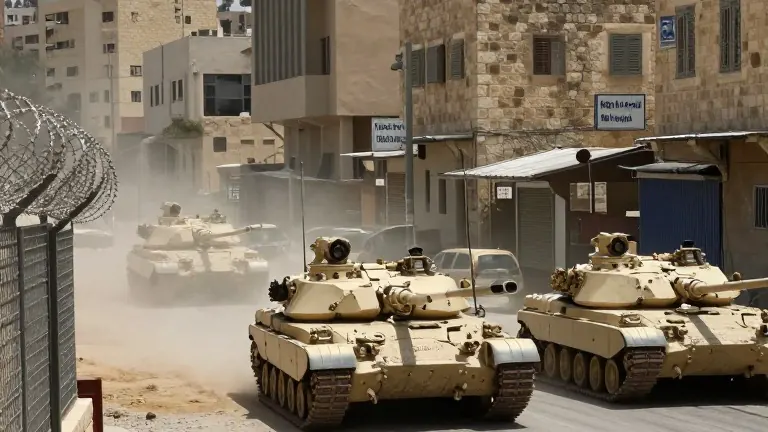
The Israeli military has maintained its blockade of Hebron for seven straight days.
Forces entered the occupied West Bank city last Friday, closing every road in and out. They restricted movement and access to basic services for the local population.
More than 3,000 people have left the city since then. Israeli troops converted several Palestinian homes into military barracks and posts, forcing residents to move.
The operation began after two Israeli soldiers were killed by Palestinian gunmen at a checkpoint near the settlement of Telem. Israeli forces later killed the two gunmen inside Hebron.
Prime Minister Benjamin Netanyahu ordered the closure on social media. He said the government would act to destroy the place and change it completely. Finance Minister Bezalel Smotrich called for a military campaign in the West Bank similar to the one in Gaza.
Since the siege started, Israeli troops have demolished dozens of buildings. They stormed the Ein Deir Bahha neighborhood at night, forcing families to flee without belongings. Soldiers also fired tear gas into Al-Ahli Hospital.
Settlers have attacked communities around the city. On Wednesday, three foreign journalists were assaulted. Andrey Ilyich Khrzhanovskiy, known as Andrey X, lost consciousness and was detained without medical care.
The Palestinian Prisoner's Society reported at least 110 detentions in the Hebron governorate. This includes three women and seven children. Two Palestinians were injured and seven were detained on Thursday alone.
Israeli forces isolated 12 villages in the Masafer Yatta region. Residents are cut off from markets and hospitals. Settlers uprooted more than 200 fruit trees and destroyed water wells east of the city.
Hebron produces about 40 percent of Palestinian industrial output and 30 percent of exports. The isolation threatens farmers who cannot harvest olives or access urban centers.
Palestinian officials say the operation is timed to secure settler votes before Israel's general election on Tuesday. The human rights group Al-Haq called the siege a prohibited act of aggression.
The Israeli NGO B'Tselem described the operation as collective punishment. UN Human Rights Chief Volker Turk warned that threats to empty neighborhoods raise concerns of ethnic cleansing.
Source: Al Jazeera