Spanish high-speed train collides with stopped rail
A computer failure in the signalling system left one train halted while another was ordered to move, causing a rear-end crash near Mora on Wednesday.
By Megan Ivanov ·
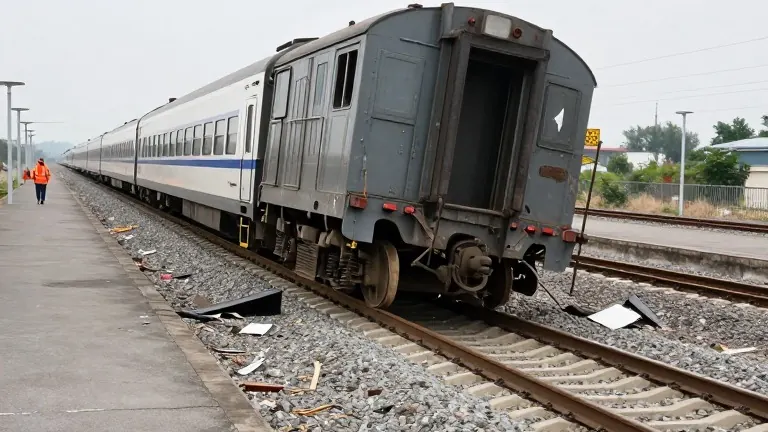
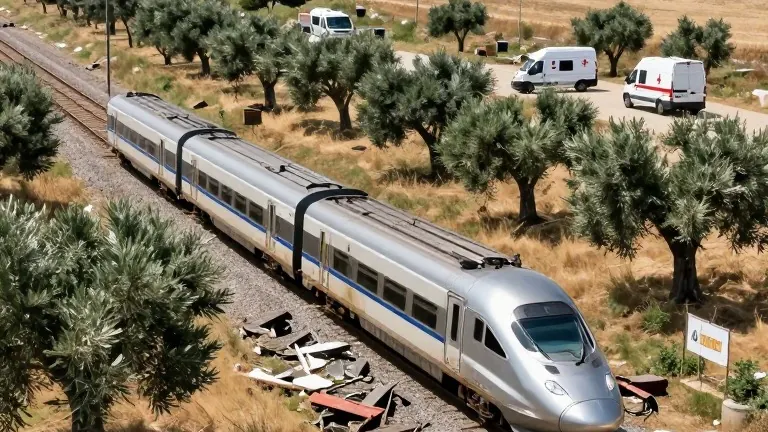
Spain’s Transport Minister Óscar Puente confirmed on Wednesday that a state-owned Renfe train crashed into the rear of a private Iryo train due to an error in the automatic signalling system. The collision occurred between the municipalities of Mora and Orgaz, approximately 140 kilometers south of Madrid. The incident followed a brief halt of multiple trains on the high-speed line connecting Madrid and Seville.
The sequence of events began around 08:30 local time on Wednesday. A reported computer failure in the signalling infrastructure forced six trains to stop on the affected section of track. One of these, an Iryo service carrying 147 passengers, remained stationary. Ahead of the halted line, a Renfe train with 397 passengers was initially stopped as well. However, at 08:36, the Renfe train received an order to proceed. Puente stated that this instruction was issued in error.
Seventeen minutes after the order to proceed, the Renfe train struck the back of the stopped Iryo train. Passengers reported a sudden acceleration followed by a violent impact. Roberto Gómez, a journalist on the Renfe train, described the carriage as completely destroyed with suitcases scattered across the wreckage. He suffered minor injuries but assisted others with severe chest and rib trauma. Rafael Barceló, who was in one of the most damaged carriages, said he and others were thrown into the air during the crash. He counted at least eight victims in his section of the train.
The force of the collision caused extensive structural damage. Salvador Arriza noted that a piece of track pierced through the roof of one coach. He observed that seats were detached and many passengers were trapped between them. Tangui Binier, a 22-year-old on the Iryo train, described seeing wires fall and smoke rising behind his carriage. Upon exiting, he and other passengers found debris scattered across the site, including body parts and visible injuries among the survivors.
Local residents arrived at the scene shortly after the crash, followed by police and ambulance units from the Guardia Civil. Uninjured passengers, including Binier’s father, helped move victims to safety. One girl with a broken hip was carried out by a bystander. The accident occurred on the same high-speed line that was the site of the Adamuz disaster in January, where 46 people died. That previous incident has intensified scrutiny of the rail network's safety protocols.
Passengers expressed frustration over the communication failures that led to the collision. One survivor questioned how a train could be stopped for several minutes without the approaching train receiving a warning. The driver of the Renfe train was not informed of the congestion ahead. Authorities are investigating the specific technical fault that triggered the erroneous order to move the Renfe service.
The collision has resulted in numerous injuries, including broken limbs and facial fractures. Medical teams treated passengers at the scene and transported others to nearby hospitals. The two damaged trains remain at the crash site near Mora. Investigators will examine the signalling records to determine the precise nature of the computer error. The line remains closed to traffic while repairs and inspections are conducted.
Source: BBC News