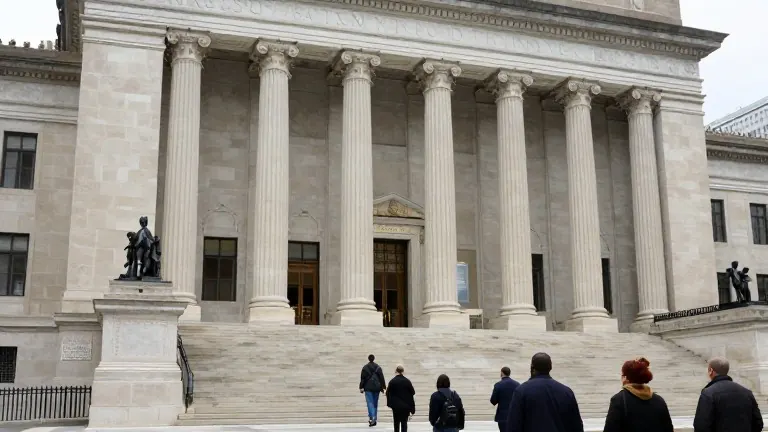
Critics challenge Taylor after Haines attack
Crossbenchers argue the opposition leader’s defense of parliamentary debate ignored the emotional weight of Helen Haines' recovery.
By Megan Ivanov ·
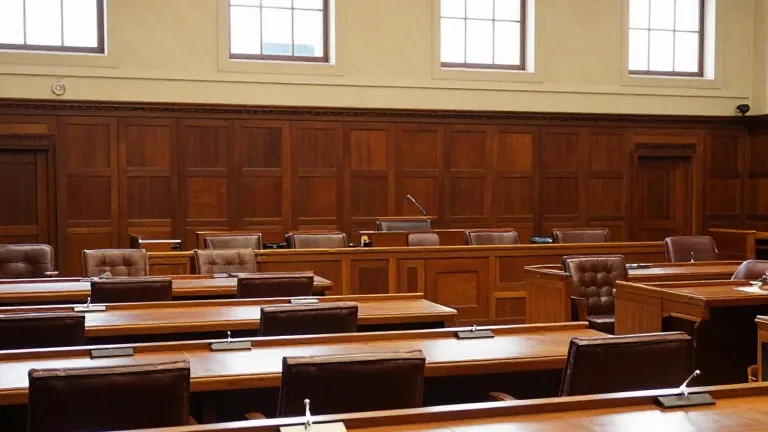
Parliament in Canberra resumed session on Monday, one week after an alleged attack outside the electorate office of Indi MP Helen Haines in northern Victoria. The incident, which resulted in Haines losing both legs, has intensified scrutiny of the physical and verbal environment surrounding Australian politics. A 43-year-old man has been charged, and police are continuing their investigation without revealing a confirmed motive.
The central point of contention involves a speech delivered by opposition leader Angus Taylor. Taylor rejected the idea that a causal link exists between vigorous parliamentary debate and political violence. He argued that the Westminster system relies on robust discussion to settle differences, stating that politicians debate with adversarial vigour but must never allow that intensity to spill over into physical force. Taylor also suggested that judges should impose harsher penalties on those found guilty of intimidation or violence against politicians.
Crossbenchers Monique Ryan and Zali Steggall pushed back against Taylor’s framing. Steggall, the independent member for Warringah who sits next to Haines in the lower house, said she was personally disappointed by the address. She asserted that there is a direct link between words and actions. Steggall stated that Taylor did not read the room regarding the lesson Haines wants the nation to learn. She emphasized that to make sense of the tragedy, Australia must accept responsibility for the impact of parliamentary debate beyond the chamber walls.
Ryan, the independent member for Kooyong, described Taylor’s response as tone deaf and hugely disappointing. She told ABC TV that if the opposition leader does not believe the words used in politics matter, his aspiration to lead a party is unclear. Ryan argued that the party must rise to the occasion now to consider how it behaves in the house and in public spaces.
Former Liberal leader Peter Dutton offered a different perspective in an interview with News24. He described the possibility of more violence against politicians as inevitable. Dutton said it came as no surprise to him that the attack occurred, noting that tension has been building for a long period of time. Meanwhile, One Nation MP Barnaby Joyce told the same outlet that his thoughts and prayers were with Haines and her family. Joyce called the attack unAustralian but dismissed the idea that changing question time would solve the underlying problem.
Steggall referenced conversations held on Monday in Canberra with Phil Haines, Helen Haines' husband. She reported that he asked politicians to raise the bar so that when Helen returns to the chamber, there has been a meaningful shift toward respectful debate. Steggall noted that while disagreement is acceptable, words have a tangible impact. The episode has triggered a wider debate about the safety of members of parliament and the culture of political discourse in the country.
Source: The Guardian