Honda Marysville plant marks 44 years since first Japanese-made U.S. car left line
The November 1982 production milestone in Ohio fundamentally altered the American automotive market by establishing a permanent foothold for foreign manufacturers on domestic soil.
By Megan Ivanov ·
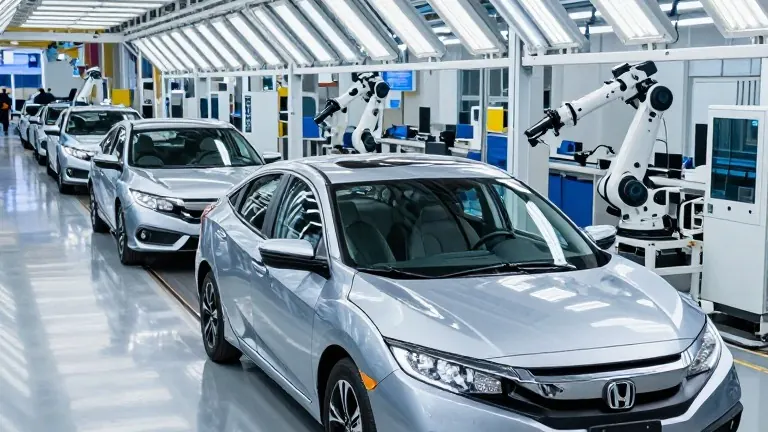
The Honda manufacturing facility in Marysville, Ohio, produced the first Japanese-built automobile in the United States on November 1, 1982. This event marks a specific inflection point in the history of the American auto industry. It was the initial step in a shift that moved global vehicle production into U.S. factories, changing how cars were built and sold in the country.
The plant was located in central Ohio, a region previously associated primarily with domestic Big Three manufacturers. The arrival of Honda represented a new competitive dynamic for American consumers. The car that rolled off the line on that day was a Civic, a model that had already gained popularity in its home market. This specific model choice signaled a focus on fuel efficiency and reliability, traits that would become synonymous with Japanese automotive brands.
Honda’s decision to build a plant in Marysville was part of a larger strategy to expand its presence in North America. The company had been importing vehicles from Japan for several years prior to the 1982 production start. By establishing a domestic manufacturing base, Honda could avoid certain trade barriers and bring jobs to the local economy. The Marysville plant would become the headquarters of Honda’s North American operations, a role it has maintained since its inception.
The impact of that first car was immediate and measurable. U.S. sales of Japanese-made vehicles began to climb in the years following 1982. American consumers started to view cars from Japan as viable alternatives to domestic brands. This shift pressured traditional U.S. automakers to improve their own efficiency and quality standards. The competitive pressure helped drive innovation across the entire industry during the 1980s and 1990s.
Today, the Marysville plant remains a major industrial site in Ohio. It serves as a production hub for several Honda models, continuing the legacy started forty-four years ago. The site has expanded over the decades, becoming one of the largest automotive manufacturing facilities in the state. The original milestone is now a part of the local industrial heritage, illustrating how a single production line can reshape a national market.
The date November 1 is also remembered for other historical events, including the 1512 inauguration of the Sistine Chapel ceiling and the 1755 Lisbon earthquake. However, for the automotive sector, the 1982 Honda event stands out as a concrete change in manufacturing geography. It marked the end of a period when Japanese cars were exclusively imported goods and the beginning of an era of localized production.
Source: Boston Herald
More Business · Watch Your Wallet · Report a business · Got a Story?