Ukraine Forced to Rethink Battlefield Comms as Satellite Access Shifts
Kyiv and European leaders are confronting how to maintain drone operations and military coordination if satellite internet service continues to be disrupted.
By Sophie Zhang ·
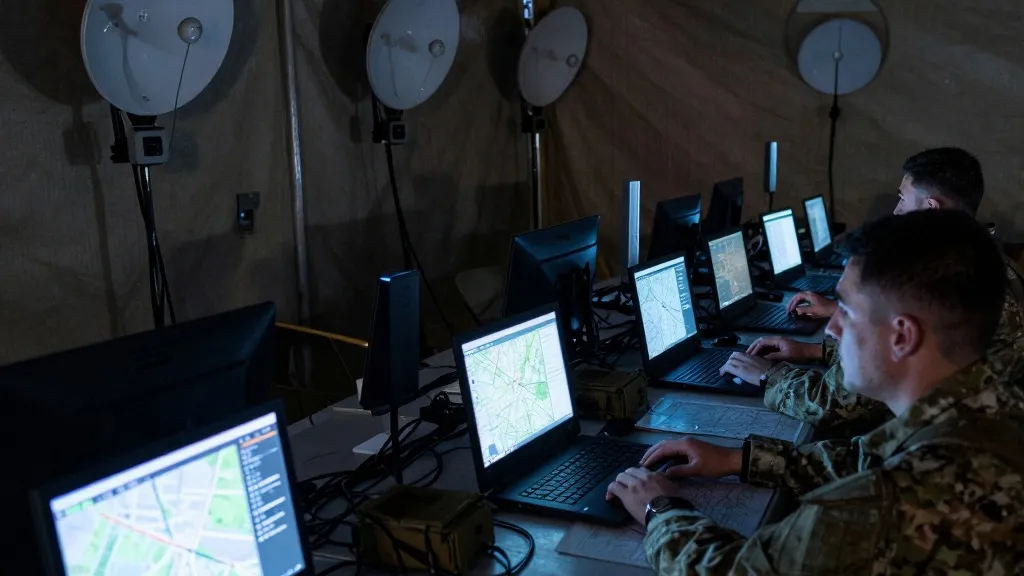
Ukrainian forces are adjusting to sudden gaps in satellite connectivity, a change that impacts everything from civilian internet access to the guidance of drones used in air defense and offensive strikes. The reliability of Starlink service has been fluctuating, forcing military planners to consider how to maintain operations if high-speed data links are not consistently available.
For years, the Starlink network has served as a cornerstone for Ukraine's defense, providing the high-speed data streams necessary for both everyday communication needs and complex military maneuvers. The system allows for the remote control and targeting of drones, a capability that is essential for both intercepting incoming Russian attacks and striking Russian positions.
A representative from BlueBird Tech, a Ukrainian defense firm, described the limitations of current satellite communications. "Starlink currently offers some of the best satellite coverage available, with virtually no competitors when you consider the combination of cost, availability, and ease of use," the head of hardware R&D told reporters on condition of anonymity. "In practical terms, the main limitation is the need to position the antenna so it can receive signals from the satellites."
The reliance on this specific satellite provider has created new anxieties for Ukraine and its European allies. Recent disruptions to service have raised questions regarding the stability of the technology, prompting a review of how the nation and the continent can move forward without total dependence on a single commercial network.
The funding for these communications tools has come from abroad. The United States government, along with nations such as Poland and Germany, has covered the costs for tens of thousands of commercial terminals sent to Ukraine, as well as paying the associated subscription fees.
Beyond the commercial units, the United States has provided the Ukrainian military with access to a military-grade version of the network known as Starshield. This specialized system allows Ukrainian defense companies to test their technologies in cooperation with the military.
As of October 23, 2026, officials are closely monitoring the situation. The focus remains on finding ways to secure stable communications for drone operations and military coordination in the event that further service disruptions occur.
Source: Ars Technica · original report published