Dolores Huerta, 97, Dies: A Legacy Defined by Labor and Jazz
The civil rights leader's recent passing has drawn attention to her deep personal connection to jazz, a passion she shared in a 2017 podcast appearance.
By Aiko Lombardi ·
Dolores Huerta, the labor organizer and civil rights leader who co-founded the United Farm Workers union, has died at the age of 97. Her death marks the end of a life dedicated to agricultural workers and political advocacy, but it also brings renewed attention to a less publicized aspect of her character: a profound devotion to jazz music.
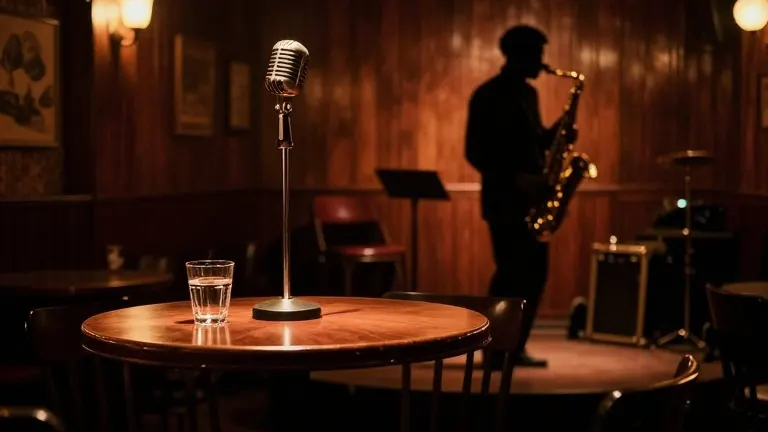
Huerta remained active in organizing work well into her ninth decade. While she is widely recognized for her political career, her personal affinity for jazz was documented in September 2017. During that appearance, she served as a guest host on the NPR Music podcast Alt.Latino. The segment was not a formal interview but a musical showcase, allowing Huerta to select and discuss tracks that influenced her.
Felix Contreras, the host of Alt.Latino, invited Huerta to the program following a screening of the PBS documentary Independent Lens. The film, directed by Peter Bratt and executive produced by Carlos Santana, premiered in 2017. Contreras approached Huerta in Washington, D.C., to invite her to discuss the film on a music-focused platform. Huerta accepted, noting her ability to speak about music as well as politics.
Her background in union organizing involved the use of agitprop theater and Mexican folk music as tools for mobilization. Contreras expected her selection to reflect that heritage. Instead, Huerta chose a playlist centered on jazz standards and Afro-Cuban rhythms. She traveled from her home in Stockton, California, to attend jazz clubs in San Francisco, a habit she discussed during the recording.
Huerta recounted a specific memory of meeting jazz saxophonist Charlie Parker. She described the encounter as a moment of complete silence on her part. "I was dumbstruck. I couldn't talk," she said. "When I saw Charlie Parker, I just started staring at him.. I was just frozen, just frozen." She contrasted this reaction with meetings with political figures such as President Barack Obama and former President Bill Clinton, stating that she was at a loss for words only when she met Parker.
During the 2017 session, Huerta played Lena Horne's 1933 hit "Stormy Weather." She connected the song's lyrics to the political climate of the time and discussed the historical treatment of Black performers in the entertainment industry. She noted that artists like Horne were often ostracized by white audiences despite their talent. She also selected a track by Dizzy Gillespie featuring Cuban drummer Chano Pozo. Huerta used this selection to highlight the African roots of Latin American music and to address the issue of gun violence in the United States.
Chano Pozo’s career ended prematurely due to a shooting, a fact Huerta mentioned while cueing the music. She emphasized the need for vigilance to end such violence. The final track she played was a ballad from Parker's Charlie Parker With Strings album. It was a slower piece compared to Parker's faster, more famous work. In her introduction, she referenced a Latin American poet, a choice that Contreras later described as reflecting a childlike sense of awe for beauty.
Contreras stated that this final selection revealed an aspect of Huerta's life that was not widely known. He observed that her appreciation for art and beauty appeared to fuel the determination that defined her professional work. The 2017 recording serves as a primary source for understanding this side of her personality. Huerta’s career spanned decades of labor disputes and political campaigns, but her 2017 podcast appearance provided a direct audio record of her personal musical taste and her reflections on artistry.
Source: WYPR