Writer argues collective care is needed to repair fractured family bonds
Víctor Corcoba Herrero contends that individualism and digital fraud are undermining human connection, urging a return to shared responsibility and dialogue.
By Sophie Zhang ·
A contemporary Spanish writer has published an essay arguing that society is currently struggling to maintain the emotional foundations required for stable family life. The piece, authored by Víctor Corcoba Herrero, posits that genuine affection and collective listening are the primary mechanisms for healing social and personal tensions.
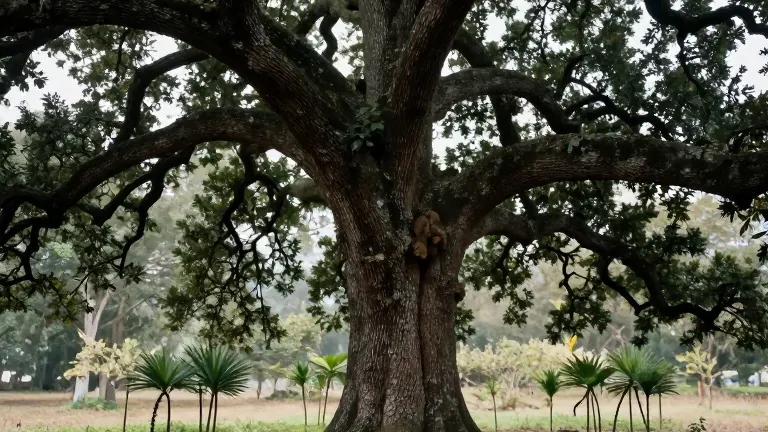
Corcoba Herrero describes existence as a rooted tree that joins together under a common trunk to form a flourishing grove. He suggests that this metaphor illustrates how human beings are not isolated islands in a turbulent sea, but rather part of an interconnected whole. According to the writer, trust and a shared rhythm of life are what align individuals and remind them of their kinship.
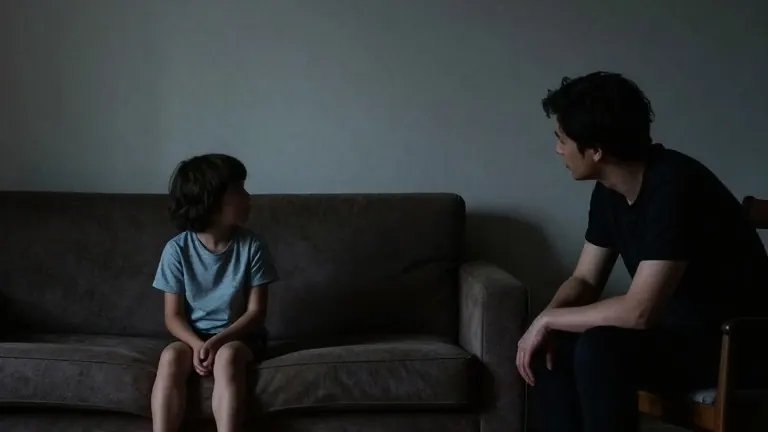
The essay critiques the rise of individualism, which Corcoba Herrero says distorts human nature by prioritizing possessive desires over a giving spirit. He notes that a daily battle is fought within families, where walls are raised and distances widened by arrogance and self-absorption. As a result, the number of people choosing to live alone or to coexist without truly inhabiting the same space is increasing, a trend he views as a sign of deepening division.
This shift, the writer argues, creates a flawed agreement among family members who treat relationships as a mere business transaction. Corcoba Herrero states that this approach excludes the principles and values that support unconditional benevolence. He observes that it is increasingly difficult to understand separations among people who have been united for a lifetime, rejecting the ideal of aging while caring for one another.
The author also points to the societal pressure that prevents many young people from forming families due to a lack of opportunities. He argues that society is driving this demographic away from traditional family structures by withholding the economic and social support necessary for them to establish households. This scarcity of resources, he claims, exacerbates the need for a more effective and conciliatory form of affection.
Corcoba Herrero distinguishes between superficial attachment and deep, enduring love. He writes that true attachment, when it sprouts from the inner workings of the relationship, never collapses but instead regenerates itself. He argues that such appreciation is not something that can be switched on or off at the consumer's whim, nor can it be blocked. It persists, impregnating the entire history of the relationship with hope.
Looking toward the future, the writer questions how a family existence can be reconstructed without the means to generate income. He proposes the promotion of shared, responsible, and affective parenthood that is grounded in concrete actions rather than the dramatized versions seen in television novels. This model, he suggests, should be fraternal and focused on facts, serving as a counterweight to the current state of affairs.
The essay also addresses the role of technology in modern human interaction. Corcoba Herrero notes that mobile devices offer successful business opportunities but can also substitute for a person's voice and identity. He warns that these tools can promise permanent adherence while simultaneously facilitating fraud. He cites global criminal networks that use artificial intelligence and cryptocurrencies to drive scams that move billions of dollars annually.
Despite these technological and economic challenges, the writer maintains that infallible love will never perish. He concludes that the only thing that heals is authentic affection poured into one's own steps. The essay urges readers to take a pause and reflect, arguing that tensions and dangers are best resolved through communion, dialogue, and mutual recognition as good citizens.
Víctor Corcoba Herrero identifies as an writer and authored the text published by Latin Opinion on October 28, 2026. The essay calls for a collective stimulus and the help of listening to navigate the current moment, which he describes as difficult. He emphasizes that humanizing coexistence contributes to the well-being of the community.
Source: Latin Opinion