Garage Door Springs Fail After 15,000 Cycles; Experts Warn Against DIY Repair
Residential springs last seven to twelve years, but rust and metal fatigue cause sudden breaks that often lead to emergency room visits.
By Aiko Lombardi ·
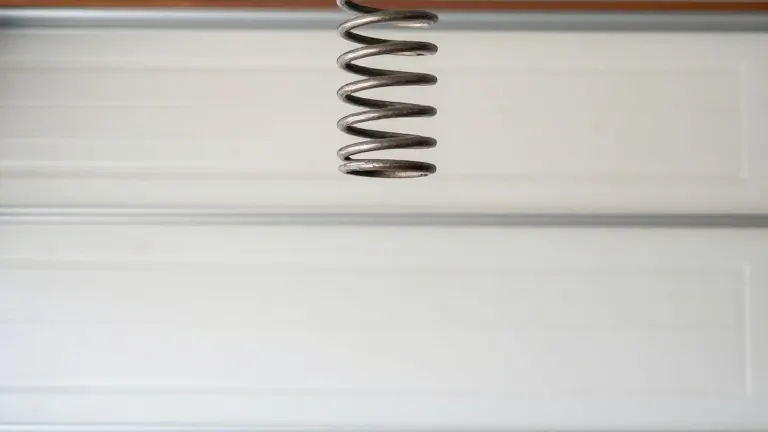
Homeowners across the United States rely on garage door springs to offset the weight of their doors, a task that places constant mechanical stress on the steel coils. The failure of these components is a frequent occurrence in the home maintenance market, driven primarily by the accumulation of mechanical cycles.
Most residential springs are rated for a lifespan of 10,000 to 15,000 cycles. For a household that operates its garage door a few times daily, this rating translates to a functional life of roughly seven to twelve years. Once a spring reaches the end of this cycle count, the metal fatigues. Microscopic cracks form within the coil, the tension drops, and the spring eventually snaps.
Environmental factors accelerate this wear process. Moisture from humidity, rain, or snowmelt causes rust to develop on the coils. This corrosion weakens the metal from the inside out, making the spring more susceptible to breaking under tension. Coastal areas and regions with harsh winters see higher failure rates due to salt air and road salt tracked onto the garage floor.
Lack of lubrication also contributes to premature failure. Without periodic application of a silicone or lithium-based lubricant, friction between the coils increases with every operation. This friction accelerates wear and reduces the overall lifespan of the spring. Additionally, incorrect installation, such as using a spring with the wrong wire gauge or tension for the specific door weight, leads to uneven stress and early breakdown.
Warning signs appear before a complete failure. Homeowners may notice that the door feels heavier than usual, opens unevenly, or makes loud popping sounds. A visible gap in the coils or rust along the spring indicates significant wear. If the door will not stay open on its own, the spring has likely lost its counterbalance capability.
While homeowners can safely inspect springs for visual damage and lubricate moving parts, replacing the springs is a specialized task. Springs remain under extreme tension even when the door is closed. A torsion spring, in particular, can release enough force to cause serious injuries, including broken bones and lacerations, if handled without specialized tools. Emergency rooms treat numerous injuries each year from homeowners attempting this repair without professional training.
Professional technicians assess the entire system, including cables, pulleys, and the torsion bar, before recommending a repair or replacement. In two-spring systems, technicians often recommend replacing both springs simultaneously. Since the springs wear at similar rates, replacing only one can lead to uneven door operation and future imbalance.
The cost of repair varies based on the spring type, door size, and the number of springs required. A proper repair involves selecting a correctly rated spring, resetting the tension with specialized equipment, and testing the door balance. Routine maintenance, such as annual inspections and consistent lubrication, helps extend the spring life and allows homeowners to plan for replacement before a sudden failure leaves the car trapped.
Source: Yonkers Times
More Business · Watch Your Wallet · Report a business · Got a Story?