Vance Uses $5.20 Gas Prices to Frame 2028 Bid
The vice president frames rising fuel costs as a historical geopolitical constant rather than a policy failure during his five-state tour.
By Sophie Zhang ·
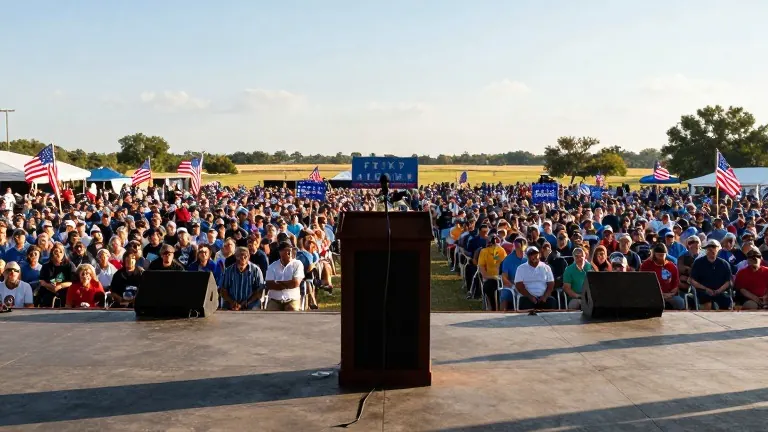
Vice President JD Vance told a crowd in Weatherford, Texas, that gas prices have spiked before and will spike again. He cited a specific price point of $5.20 to argue that current fuel costs are part of a recurring global pattern. This framing serves as a central pillar of his recent speaking tour. The tour covers five states and runs just before the midterm elections. Vance aims to distinguish his 2028 presidential message from the current White House administration.
The vice president spoke in Texas on Thursday. He shared the same afternoon with President Donald Trump, who addressed supporters in Rock Hill, South Carolina. While Trump used a high-energy performance style, Vance adopted a more measured tone. He focused on specific policy defenses and personal anecdotes. His rhetoric blended populist economic themes with cultural commentary. This approach offers a preview of his potential campaign strategy for the next presidential election.
In Howell, Michigan, Vance recounted his childhood experience with local football teams. He described how small businesses once sponsored these teams. He noted that many of those businesses no longer exist. He attributed their disappearance to distant political decisions that ignored local economic needs. He framed this loss as a consequence of politicians failing to prioritize the Midwest.
Vance also highlighted cultural shifts during his speeches. In North Carolina, he referenced a period of racial harmony among working-class youth before recent political movements. He contrasted this past unity with current divisions. He positioned his political brand as a return to traditional values. He also used informal language, including profanity, to connect with audiences. He told the Texas crowd he was sweating at the podium.
The vice president faces a specific challenge in defending the incumbent president. President Trump has lower approval ratings in key swing states. Vance avoids mentioning the Iran War, a conflict that contributed to rising fuel costs. Instead, he compares current prices to historical spikes in 1979, 2001, 2007, and 2022. He argues that geopolitical instability, not domestic policy, drives these price increases.
He addressed the cost of beef in a similar manner. He identified consolidation among meatpackers as the primary cause of high prices. This explanation allows him to deflect criticism of agricultural policy. He sidesteps the direct link between Trump's trade policies and beef producer grievances. This strategy aims to protect the party’s image while acknowledging voter frustrations.
Vance has also promoted his role as the head of the administration's anti-fraud task force. This role provides him with specific examples to discuss during speeches. In Cincinnati, he mentioned his first job at Dhillon Foods. He noted that family members benefited from federal food assistance programs. This personal history aligns with his memoir about growing up in rural Ohio.
His biography offers a narrative distinct from President Trump's. Vance can speak directly to military service and economic hardship. He uses these details to build a connection with voters. He presents his political journey as a path from local struggles to national leadership. This personal angle serves as a key component of his emerging political identity.
The next leg of his tour includes additional stops in key states. He plans to continue defending Republican candidates ahead of the November vote. His speeches will remain focused on economic stability and cultural continuity. The administration expects these messages to resonate with undecided voters in the coming weeks.
Source: WYPR