New Maps in Seven States May Defy Redistricting Intent
Mid-decade redistricting reshaped congressional districts in seven states, but voter alignment with presidential candidates suggests the lines may not deliver the expected partisan gains.
By Sophie Zhang ·
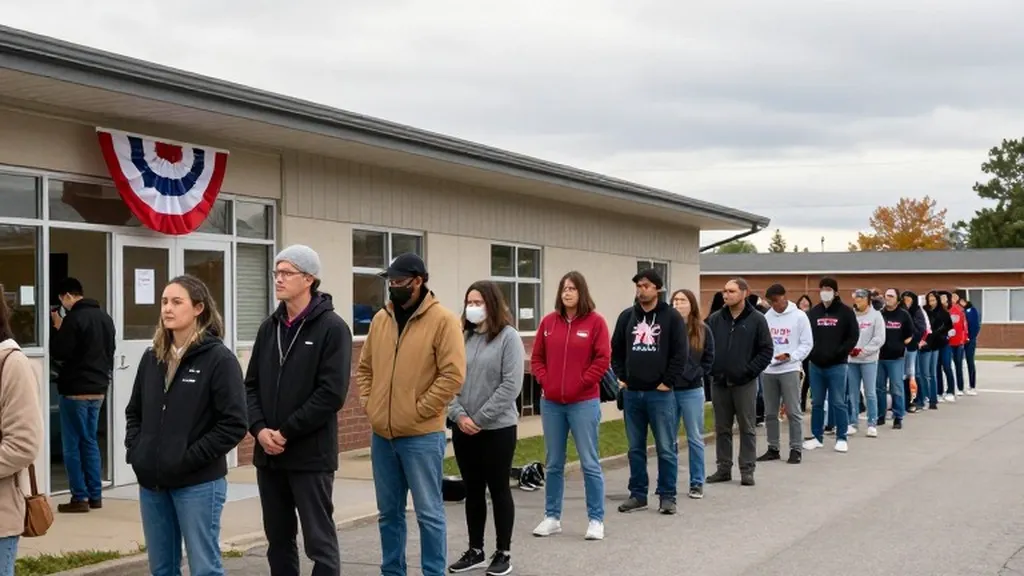
Voters across the United States are casting ballots in a midterm election that determines control of Congress for the final two years of President Donald Trump's second term. The Associated Press notes that the race is being framed as a referendum on the president's performance, with many citizens expressing frustration over high prices and an unpopular war with Iran. More than 57 million people had already voted as of Monday, a figure that surpasses early vote totals from four years ago in many closely watched states.
A significant structural change in this election cycle involves the use of new congressional maps in seven states. California, Florida, Missouri, North Carolina, Tennessee, and Texas are utilizing new boundaries following mid-decade redistricting efforts. Ohio is also using a new map for its congressional races. These changes were intended to solidify party control in certain districts, but analysts and political observers note that the results may not align with the strategic intent of the map drawers.
The discrepancy between the drawn maps and potential voting behavior is evident in the 2024 presidential results. According to Ballotpedia, 21 districts currently held by Democrats voted for President Trump in 2024. Conversely, nine districts held by Republicans voted for then-Vice President Kamala Harris. This split suggests that while the maps may favor one party in terms of seat count, the underlying voter alignment in specific districts may remain more competitive or leaning toward the opposing party than the lines imply.
In the House, all 435 seats are up for election. Republicans currently hold 218 seats, while Democrats hold 214, with one independent and several vacancies. Democrats need a net gain of three districts to secure a majority, whereas Republicans can afford to lose no more than two seats. Ballotpedia counts 46 battleground districts, split between 25 Democratic-held and 21 Republican-held seats. The 60 House incumbents who are not running again include 23 Democrats and 37 Republicans, creating additional open seats that may be more volatile than incumbent-held districts.
The Senate race involves 35 of 100 seats, including 33 regular elections and two special elections for the terms previously held by Marco Rubio and JD Vance. Republicans hold 53 seats, while Democrats hold 45, plus two independents who caucus with Democrats. Democrats need a net gain of four seats for a majority, while Republicans can lose only two. Eleven senators are not seeking re-election, including four Democrats and seven Republicans. The winners will begin six-year terms on January 3, 2027.
The new maps in states like Florida and North Carolina are particularly scrutinized because these states also have competitive Senate races. In North Carolina, former Governor Roy Cooper faces former Republican National Committee chair Michael Whatley in a race for the seat vacated by retiring Senator Thom Tillis. In Florida, Ashley Moody is seeking to fill the special seat associated with Marco Rubio's term. The Associated Press notes that the economic strain and tariffs have made several states more competitive, potentially undermining the advantages built into the new congressional maps.
Governor races are also being decided in 36 states, with Republicans holding 26 offices and Democrats 24 heading into the election. Of the races on the ballot, each party holds 18 governorships. Nineteen of these races do not feature an incumbent, as 15 governors are term-limited and four others chose not to run or lost their primaries. Democrats would need a net gain of two governorships to achieve a nationwide majority, a position Republicans have held since 2010. The new congressional maps may influence the tone of these governor races, as candidates in the same states campaign on overlapping issues.
Polling data from AP-NORC indicates that 35% of U.S. adults approve of President Trump's job performance, while only 25% approve of his handling of the economy. About seven in 10 Americans say the country is heading in the wrong direction, with most blaming the president for high prices. This sentiment is driving voter engagement, with Republicans bracing for potential losses in the House and Democrats expressing cautious optimism about their chances. The Associated Press reports that one or two seats could tip the balance in either chamber, making the alignment of voters in the new districts critical.
The financial aspect of the election is also a factor, with the 2026 elections likely to be the most expensive in history. Republican committees have outraised and outspent Democratic committees at the committee level, aided by Trump-affiliated groups and Elon Musk. However, at the candidate level, Democrats have outraised their opponents. According to AP analysis of AdImpact data, 88.1% of Republican general election TV ad spending went to states and districts that Trump won in 2024, including more than $850 million in areas where he won by 10 points or more. This heavy investment in solid Republican territory may leave less funding for the competitive districts defined by the new maps.
Voters in the seven states with new maps are making decisions based on local and national issues. In Ohio, the new map coincides with a competitive Senate race between former Senator Sherrod Brown and Senator Jon Husted, and a governor race featuring Vivek Ramaswamy. In Texas, the map is in place as Attorney General Ken Paxton runs for Senate and the governor race remains competitive. The Associated Press notes that many Republican candidates have kept their distance from the president, who has continued to make claims about voting fraud and has been active in rallies across the country, including a final stop in Salina, Kansas.