
Hopkins grad students petition over supply store cuts
Researchers argue new procurement rules will raise lab costs and burden administrative staff with extra work.
By Sophie Zhang ·
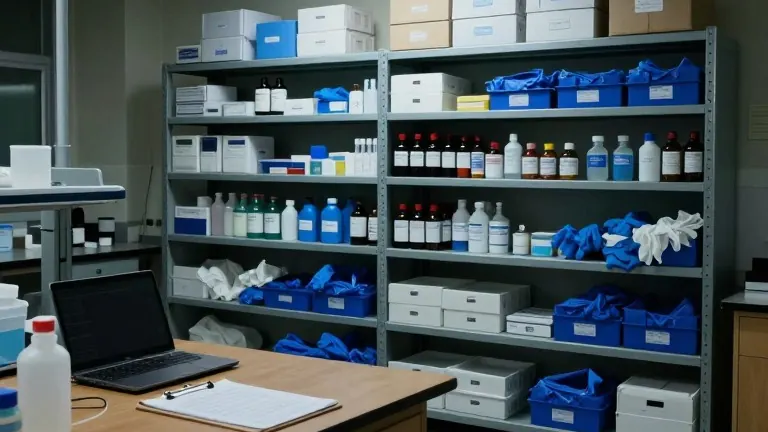
Graduate students at Johns Hopkins University are pushing back against recent cuts to the campus supply stores.
The changes took effect on October 1, 2026. They apply specifically to the JHU Procurement-managed stores in Mudd Hall and the Pre-Clinical Teaching Building on the Homewood and East Baltimore campuses. These locations previously handled bulk purchasing of routine items like gloves, tape, and reagents at institutional prices.
A University spokesperson stated the reduction stems from shifts in purchasing patterns. The new model keeps specialized or regulated items available but removes the centralized ordering for general goods. Researchers claim this shift forces labs to place individual orders directly with vendors. This process adds time to acquisition and increases monthly expenses, with some estimating additional costs in the thousands of dollars.
Administrative staff now face heavier workloads without matching storage resources. Sneha, a sixth-year Ph.D. student in Biology, noted that departmental offices lack the capacity to handle temperature-sensitive reagents that the stores previously managed. This gap risks the degradation of expensive materials. In Chemistry, a departmental stockroom can replace only about 75% of the supplies previously available through the central store, leaving gaps that require direct vendor orders.
More than 200 faculty, staff, and students signed a petition demanding greater transparency. The University received the petition on October 16, 2026. A spokesperson said the institution began communicating with divisions in early August and is working with the Teachers and Researchers United union through standard processes. Researchers report they have not yet held a formal meeting with administrators regarding the issue.
Joanna, a sixth-year Ph.D. student in Chemistry, described the stores as intermediaries that negotiated discounts and managed logistics. She said the new system places a heavy burden on budget specialists and stockroom workers. Kelly Chen, a second-year Ph.D. student in Chemistry, added that undergraduate lab courses also relied on these stores, extending the impact of the cuts beyond graduate research.
The University maintains the transition allows researchers to compare suppliers and access a wider product range. Administrators indicated they intend to act on the petition shortly. Students remain hopeful for collaborative solutions if communication improves.
Source: The Johns Hopkins News-Letter